


Key Takeaways
- Physical grain data and futures/options activity often live in separate systems, forcing daily manual reconciliation.
- That gap creates real exposure: stale position data, mark-to-market surprises, hidden basis and delivery risk, and slower decisions during harvest.
- Levridge Commodity Accounting, built on Microsoft Dynamics 365, links futures and options directly to the physical contracts they hedge.
- The result is a single, current source of truth for merchandisers, risk managers, and finance leaders, no side reconciliation required.
- Boyer & Associates and Levridge together bring this functionality to grain elevators, cooperatives, and commodity processors already running Microsoft Dynamics 365 F&SCM.
If you manage risk for a grain elevator, cooperative, or commodity processor, you already know the theory of hedging cold. Sell futures to protect a long cash position, buy futures to protect a short one, and let options add flexibility when you want a floor or a ceiling without giving upupside. The theory isn’t the hard part.
The hard part is seeing your whole position at once: the bushels in the bin, the contracts on the books, and the futures and options hedging them, without stitching together three or four systems every morning to find out where you actually stand. That’s what it means to link futures and options to physical grain positions in one place, rather than reconciling them after the fact.
The Disconnect Between Cash and Paper Positions
For a lot of agribusinesses, physical grain data lives in one place: purchase contracts, scale tickets, settlements, inventory. Futures and options activity lives in another: a broker portal, a trading platform, or an end-of-day spreadsheet someone rebuilds every night. Getting from those two data sets to one true net position takes manual reconciliation, and manual reconciliation takes time you don’t have when markets move fast.
That gap creates real exposure:
- Stale position data. If your long/short report is built from yesterday’s numbers, you may be more, or less, hedged than you think.
- Mark-to-market surprises. Margin calls and P&L swings feel a lot more manageable when your accounting system is already tracking mark-to-market daily, not reconstructing it at month-end.
- Basis and delivery risk hiding in plain sight. A clean futures hedge can still leave you exposed on basis or delivery timing if your system isn’t tying the paper trade back to a specific physical contract or scale ticket.
- Slower decisions during harvest and other peak windows. The moments when hedging decisions matter most are exactly when your team has the least time to manually reconcile spreadsheets.
Why Real-Time Position Visibility Matters
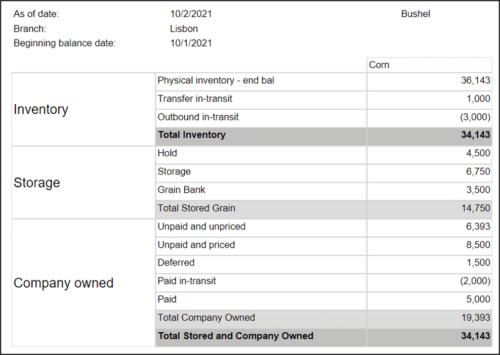
Two reports do most of the heavy lifting in commodity risk management: the Daily Position Report (DPR) and the long/short position report. Done well, these give merchandisers, risk managers, and CFOs a shared, current view of:
- Market risk exposure across futures, options, and cash positions
- Delivery risk tied to specific contracts and commitments
- Inventory levels across raw commodity, work-in-process, and finished product
The catch is that a DPR is only as good as the data feeding it. If futures and options positions are tracked separately from purchase contracts, sales contracts, and inventory, the report is a snapshot built from a reconciliation process, not a live picture of your business.
How Levridge Connects Futures and Options to Physical Grain
Levridge Commodity Accounting is built on Microsoft Dynamics 365, extending the platform’s financial, inventory, and supply chain capabilities with the ag-specific tools grain elevators, commodity processors, and ag retailers actually run on: bid sheets, grower offers, purchase and sales contracts, scale tickets, settlements, and inventory management, all in one system.
Risk management sits inside that same system, not bolted on beside it. That means:
- Futures and options management lives alongside the physical contracts they’re hedging, so a position isn’t “hedged” in theory. It’s hedged and visible against the specific bushels, contracts, or deliveries it covers.
- Mark-to-market accounting updates as part of your normal accounting cycle, instead of a separate reconciliation exercise your team runs after the fact.
- Daily Position Reports and long/short reporting pull from the same data as your contracts, settlements, and inventory, so market risk, delivery risk, and inventory visibility show up together, current as of today, not last week.
The result is a single source of truth for merchandisers, risk managers, and finance leaders. Everyone is looking at the same numbers, at the same time, without a side reconciliation process to explain the gaps.
What This Looks Like Day to Day
Connecting futures and options to physical positions changes how a hedge actually plays out, not just how it’s reported. Picture a merchandiser at a grain elevator locking in basis on a fall delivery contract, then layering on a futures hedge to manage the outright price risk. In a connected system, that futures position is tied to the physical contract from the start. When prices move, the mark-to-market impact flows through automatically. The long/short report reflects the net exposure, cash and paper together, and the CFO reviewing risk exposure at month-end isn’t waiting on a spreadsheet to catch up with reality.
That’s the difference between hedging as an activity and hedging as a system: one where physical and paper positions were never separate to begin with.
Why Boyer + Levridge
Boyer & Associates has spent more than 30 years helping organizations get the most out of Microsoft Dynamics 365, and agribusiness is one of the industries we know well. As a Microsoft Dynamics 365 Finance & Supply Chain Management implementation partner, we work alongside the Levridgeteam to bring this commodity accounting and risk management functionality to grain elevators, cooperatives, and commodity processors who need it to fit the way they actually operate. Boyer’s ag-specific work, including settlement processing improvements alongside Levridge, extends into risk management functionality like the futures and options linkage covered here. For agribusinesses running ag retail operations alongside grain, Levridge’s Ag Sales solution covers billing splits, prepayments, and volume discounts in the same connected system.
Ready to Hedge with Confidence?
If your futures and options positions still live in a different system than your physical grain contracts, it’s worth asking how much time and risk that gap is costing you. Reach out to Boyer & Associates for a free assessment of your current commodity accounting and risk management setup, and see what it looks like to manage cash and paper positions in one connected system.
Read next: Why Legacy Agribusiness ERP Software Is Quietly Killing Your Growth

FAQ
What does it mean to link futures and options to physical grain positions?
It means your futures and options hedges are tracked in the same system as your physical grain contracts, scale tickets, and inventory, so your net market and delivery risk is visible in real time, rather than reconciled separately.
What is mark-to-market accounting in grain merchandising?
Mark-to-market accounting revalues futures and options positions to current market prices on an ongoing basis, so gains and losses on hedges are reflected in your financials as markets move, not just at settlement or month-end.
What is a Daily Position Report (DPR) and why does it matter for grain elevators?
A DPR is a daily summary of market risk, delivery risk, and inventory position. It matters because it gives risk managers and CFOs a current, accurate view of exposure, which is only reliable if the underlying physical and futures/options data come from the same source.
Is Levridge built on Microsoft Dynamics 365?
Yes. Levridge Commodity Accounting extends Microsoft Dynamics 365 Finance & Supply Chain Management with ag-specific functionality for commodity contracts, scale tickets, settlements, inventory management, and risk management, including futures, options, hedging, and mark-to-market accounting.
Who typically uses Levridge’s risk management tools?
Grain elevators, commodity processors, cooperatives, and ag retail operations use Levridge to manage futures and options, hedging, Daily Position Reports, long/short position reports, and mark-to-market accounting alongside their physical grain contracts and inventory.
Boyer & Associates is a Microsoft Dynamics 365 Finance & Supply Chain Management implementation partner based in Minneapolis, and 2023 Microsoft US Partner of the Year. Boyer partners with Levridge to bring commodity accounting, futures and options management, and mark-to-market risk management to grain elevators, cooperatives, and commodity processors running Microsoft Dynamics 365 F&SCM.