


You quoted the job confidently. You won the contract. Now, six weeks into production, your costs have drifted and you’re not entirely sure where. If you’re running an engineer-to-order (ETO) or make-to-order (MTO) manufacturing operation, this scenario isn’t a failure of execution. It’s often a failure of systems.
Job costing in custom manufacturing is fundamentally different from standard production environments. Every job is a moving target: unique specs, custom engineering, shifting scope, and labor and materials that need to be captured in real time across multiple phases. When your ERP or accounting tools weren’t designed for this complexity, the cracks show up in your margins.
Here’s a look at the eight places job costing most commonly breaks down in ETO and MTO environments — and what it takes to fix them.
1. Front-end estimating accuracy
In ETO manufacturing, your estimate is your cost baseline. If your quoting process relies on spreadsheets, institutional memory, or disconnected tools, you’re building your job budget on a shaky foundation.
The problem isn’t effort — We know your estimators work hard. The problem is that historical cost data isn’t feeding back into the quoting process in a structured way. Without a connected system pulling actual job costs from previous similar work, estimators are essentially starting from scratch every time.
2. Cost capture by job
Once a job is awarded, every dollar spent needs to be tracked against it: labor, materials, subcontractors, tooling, shipping. In practice, this is where many manufacturers start leaking margin without realizing it.
Costs get posted to the wrong job. Time gets recorded in a weekly batch instead of daily. Materials are pulled from inventory without a proper job allocation. Each of these feels like a minor administrative issue, but collectively they make your job cost reports unreliable, and unreliable data leads to decisions you wouldn’t otherwise make.
3. Engineering change and scope-change control
Scope changes are a fact of life in custom manufacturing. The customer modifies the spec. Engineering discovers a design issue. A supplier substitution changes the bill of materials. What matters isn’t whether changes happen but whether your system captures the cost impact when they do.
Without a formal engineering change order (ECO) process tied to your job cost structure, scope creep becomes invisible margin erosion. Research published in the Journal of Defense Analytics and Logistics by Air Force Institute of Technology faculty found that major projects with engineering changes exceeded their initial cost estimates by 72%, while jobs with no changes increased by only 11%.
4. Cost control by phase or work breakdown structure (WBS)
Not all job cost overruns happen at the end. Many develop gradually across discrete phases such as engineering, fabrication, assembly, testing, installation. But you don’t see them until the job closes and by then, it’s too late to course correct. Breaking your job into a work breakdown structure (WBS) and tracking costs at the phase level gives your project managers and controllers visibility while there’s still time to act. This is standard practice in construction and aerospace, and it’s increasingly expected in complex discrete manufacturing. The ability to spot a budget overrun in the fabrication phase, while assembly hasn’t started yet is the difference between managing a problem and absorbing it.
5. Real-time visibility to estimate vs. actual
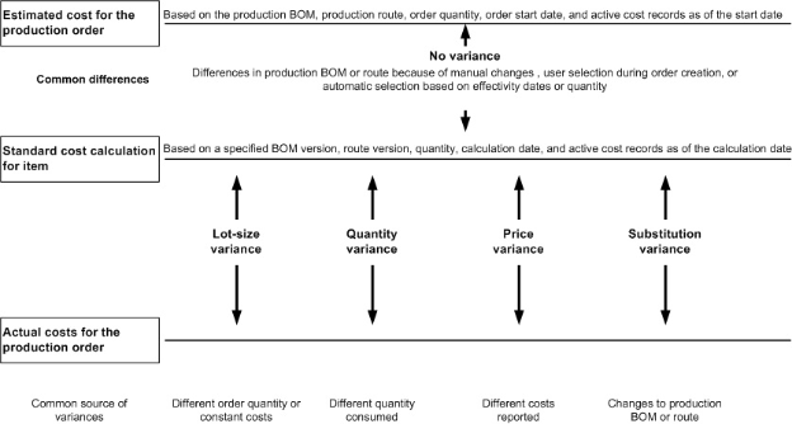
The estimate vs. actual report is the heartbeat of job cost management. However, all too often, teams report on this weekly or at job close, and the data is already days old.
Real-time visibility like knowing today where you stand against your original estimate on labor hours, material consumption, and subcontractor costs, changes how your team manages jobs. You can catch problems earlier and make decisions with current data. Margin surprises at close become far less common.
Microsoft Dynamics 365 Finance & Supply Chain Management (F&SCM) delivers this kind of live job cost visibility, tying time and material transactions directly to job records as they occur, rather than waiting for period-end reconciliation.
6. Operational time and material capture discipline
Your ERP is only as accurate as its data. In manufacturing environments, this is often the weakest link. We see it all the time:
-
- Technicians skip time entry
-
- Materials are pulled informally
-
- Overtime doesn’t get coded to the right work order
The fix isn’t just a technology problem; it’s a process and culture problem. You need to reinforce job costing discipline through training, visible reporting, and managers who hold their teams accountable for timely, accurate data entry. At Boyer & Associates, we’ve found that the technical implementation of job costing is rarely the hard part; building the human habits around it is where the real work happens.
“(Boyer) did a very good job of coming out and understanding what our business was like, what our needs are, what we were looking for … and tailoring the software to what we were needing.”
Kevin Mays, CFO at Owl’s Head Alloys
7. Realistic overhead allocation to job
Overhead allocation is one of the least glamorous topics in manufacturing finance yet one of the most consequential. If your overhead rates are based on outdated labor hours, or if they’re applied as a blanket percentage with no regard for job complexity or machine utilization, your job-level profitability data will mislead you.
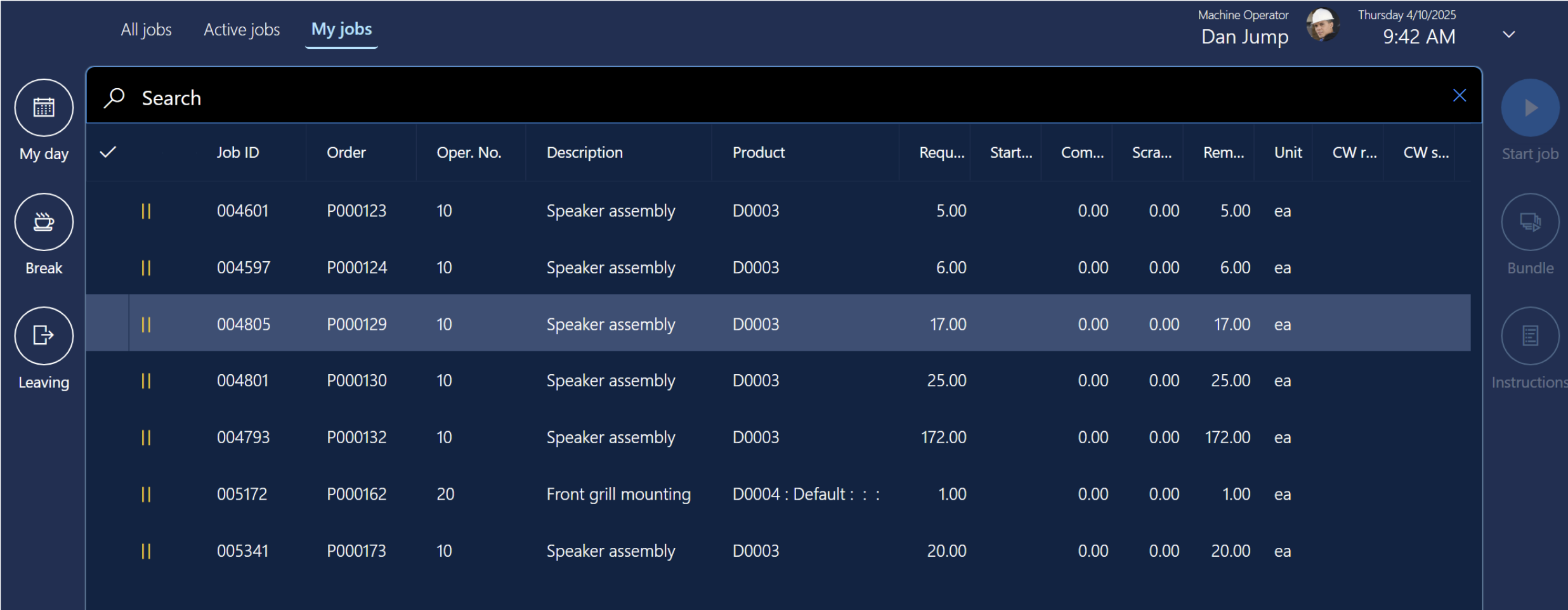
Dynamics F&SCM implementations allow overhead rates to be configured by work center, cost category, and production route. This gives you allocation that actually reflects how your shop consumes resources across different job types. When overhead is allocated realistically, your job margins tell you the truth. When it isn’t, you’re flying blind.
8. Closed-loop learning back into quoting
The full value of job costing is only realized when closed-job actuals feed back into future estimates. This is the closed loop, and it’s the step most ETO manufacturers never fully close.
When your estimators can query actual labor hours, material costs, and overhead by job type, product family, or customer, your quotes get smarter over time. You stop repeating the same underestimates. You build in contingency where history tells you to. And your win rate on profitable work improves because you’ve grounded your pricing in reality, not optimism.
Boyer’s experience in client implementations shows that this closed-loop discipline is one of the highest ROI capabilities available to ETO and MTO manufacturers and one of the most overlooked.
The right platform makes the difference
None of these eight breakdowns are inevitable. They’re the predictable result of using tools that weren’t designed for the complexity of custom manufacturing. Microsoft Dynamics 365 F&SCM is built to handle the full lifecycle of job cost management. Your team can benefit from integrated estimating and WBS-level tracking to real-time estimate vs. actual dashboards and closed-loop learning.
As a 2023 Microsoft US Partner of the Year, Boyer & Associates has helped manufacturers across the country move from margin surprises to margin confidence. Whether you’re evaluating a new ERP or looking to get more out of your existing Dynamics investment, Boyer brings both the technical depth and the manufacturing industry knowledge to make it work.
Ready to get job costing right? Contact Boyer & Associates today to schedule a discovery session and learn how F&SCM can transform job costing across your ETO or MTO operation.

Frequently asked questions about job costing in engineer-to-order manufacturing
What is job costing in engineer-to-order manufacturing? Job costing in ETO manufacturing is the process of tracking every cost, including labor, materials, subcontractors, and overhead, against a specific job or production order. Because each job is unique, costs must be captured in real time and compared to the original estimate to protect margins and inform future quotes.
Why does job costing fail in ETO environments? The most common failure points are disconnected estimating tools, poor time and material capture discipline, uncontrolled scope changes, and the lack of a closed-loop feedback process from job actuals back into quoting. Most of these problems stem from using ERP or accounting tools that weren’t designed for custom manufacturing complexity.
How does Dynamics 365 F&SCM support ETO job costing? Microsoft Dynamics 365 F&SCM supports ETO job costing through integrated WBS tracking, real-time estimate vs. actual reporting, configurable overhead allocation by work center and cost category, and closed-loop visibility between job close data and the quoting process. Learn more about Boyer’s F&SCM capabilities.
What is a work breakdown structure (WBS) in manufacturing? A work breakdown structure divides a job into discrete phases, such as engineering, fabrication, assembly, testing, and installation, and assigns cost budgets to each. WBS-level tracking lets project managers and controllers see where costs are running over budget while there’s still time to act, rather than discovering overruns at job close.