


The Growth Paradox
Most manufacturers don’t outgrow their ERP because something broke. They outgrow it because the business got bigger, more complex, or more distributed than the system was ever set up to handle. A single-plant operation adds a second location. A regional distributor starts selling internationally. A company on a steady growth curve suddenly does an acquisition and has to fold in another set of books, another warehouse, another set of processes.
None of that is a failure on your part. It’s success creating a new problem, and it’s one of the most common reasons we get called in.
The Telltale Signs You’ve Outgrown It
A few patterns show up again and again in growing manufacturing businesses:
- Shadow spreadsheets. Planning, costing, or consolidation increasingly happens in Excel because the ERP can’t do it natively anymore, and now the real numbers live outside the system of record.
- No real-time visibility across plants or warehouses. Decisions get made on yesterday’s data because nothing ties locations together in real time.
- Planning that can’t keep up. MRP logic built for a simpler operation starts to buckle under real demand variability, multi-site sourcing, or more complex bills of material.
- A month-end close that keeps stretching. More transactions, more entities, and more manual reconciliation mean close goes from days to a week or more.
- A growing pile of bolt-on point solutions: a separate WMS, a separate quality system, a separate scheduling tool. Each one solves a real problem, but none of them talk to the ERP or to each other.
- New requirements the system wasn’t built for: lot traceability, regulatory compliance, or multi-currency and multi-entity consolidation that didn’t exist when the system was first implemented.
Why This Happens Even to ERPs That “Used to Work Fine”
This isn’t usually a case of bad software. Systems like Dynamics GP, NAV, or AX, along with smaller entry-level platforms, were built and configured for a specific level of complexity: often a single entity, a single currency, a more straightforward operation. They don’t fail outright as the business grows past that. They just start requiring more workarounds, more manual steps, and more custom patches to do things they weren’t originally designed to do.
Each workaround feels manageable on its own. Stacked up over a few years, they add real cost, real risk, and a system nobody fully trusts anymore. That’s the scaling ceiling, and it’s a normal stage of growth, not a sign anything was done wrong the first time around.
What It Costs You If You Ignore It
The costs compound quietly. Inventory decisions made on stale or incomplete data lead to write-offs or stockouts. A slow close means leadership is always making decisions on last month’s picture, not this month’s. Audits get harder to support when data lives in spreadsheets instead of the system of record. And an acquisition that should add capacity instead adds chaos, because there’s no clean way to bring another entity into the fold.
Meanwhile, your IT team’s time increasingly goes toward patching and workarounds instead of improving how the business actually runs.
What to look for next: the case for Microsoft F&SCM
Dynamics 365 Finance & Supply Chain Management (F&SCM) is built for exactly the complexity that outgrows entry-level and legacy systems. Mapped against the pain points above:
- Multi-entity, multi-currency financials that are native to the platform, not bolted on after the fact: built for consolidating multiple plants, subsidiaries, or newly acquired entities cleanly.
- Advanced planning and MRP that can handle real demand variability, multi-site sourcing, and more complex bills of material without falling back on spreadsheets.
- Real-time visibility across plants and warehouses in a single system, so decisions get made on what’s happening now, not what happened last week.
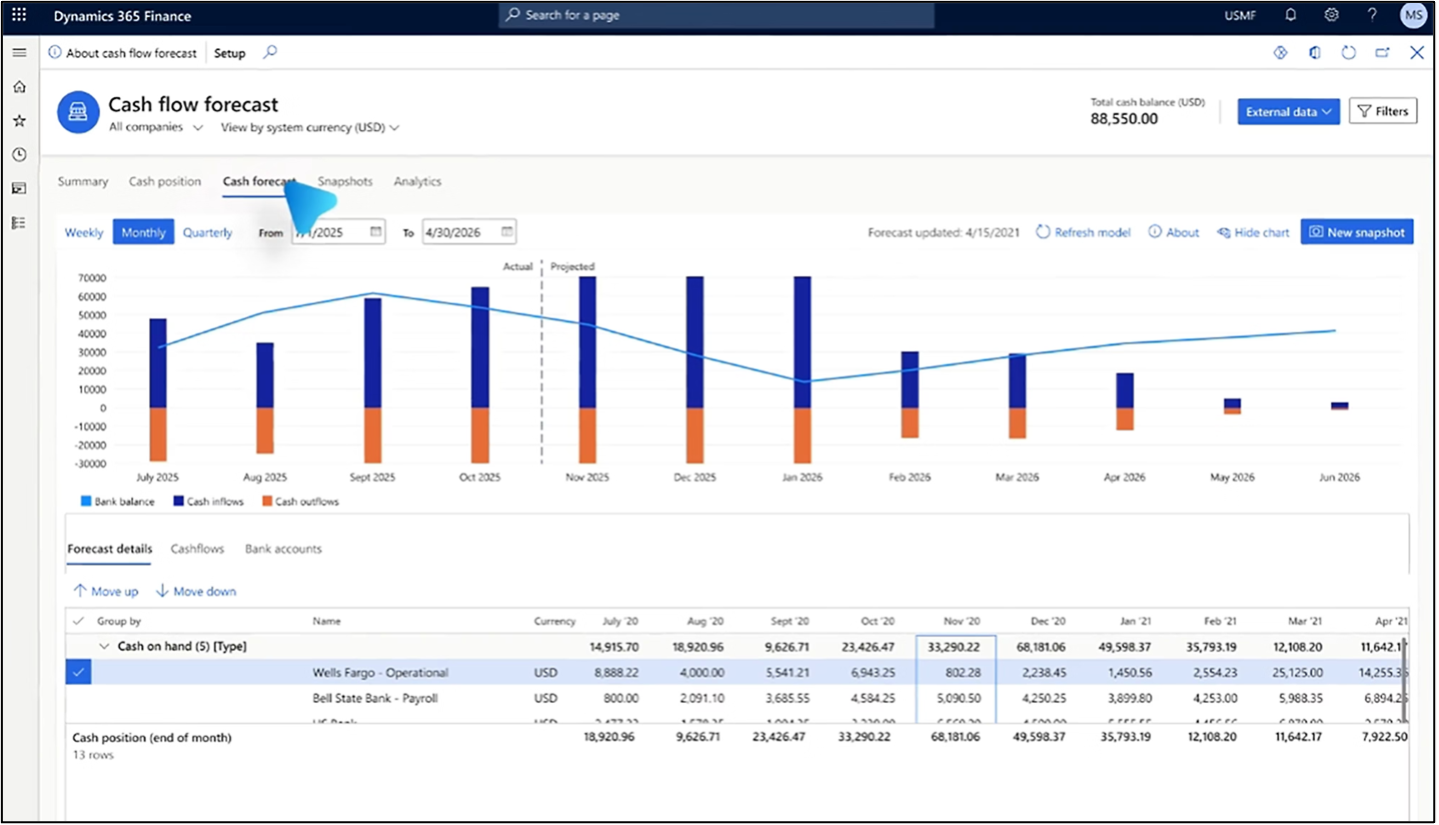
- Native integration with Power BI, the Power Platform, and Copilot, turning operational data into forecasting and reporting instead of a monthly export exercise.
- Room to keep growing. F&SCM is built for the complexity you’re heading toward, not just the complexity you have today.
Making the Move Without Derailing Operations
The most common hesitation we hear isn’t whether a change is needed. It’s fear of the disruption. Manufacturing doesn’t get a pause button, and a bad implementation can cost more in downtime than the old system ever did in inefficiency.
That’s exactly where the right partner matters. Boyer’s manufacturing and distribution clients typically move through a phased approach, grounded in manufacturing-specific experience rather than a generic rollout playbook. That lets you modernize the parts of the business that are hurting most first, without putting the plant floor at risk.
Where Boyer Fits In
Boyer & Associates has spent more than 30 years helping manufacturers and distributors get more out of their Microsoft investment, including guiding companies through exactly this transition, from legacy or entry-level systems to Dynamics 365 F&SCM, without losing momentum along the way. As a 2023 Microsoft US Partner of the Year with more than 425 clients, Boyer has seen this scaling ceiling from nearly every angle and knows what a clean transition actually looks like on a plant floor.
If some of these signs sound familiar, it’s worth a conversation before the workarounds pile up any higher.
Frequently Asked Questions
How do I know if my manufacturing business has outgrown its ERP?
Look for shadow spreadsheets covering work the ERP should handle, a month-end close that keeps stretching, no real-time visibility across plants or warehouses, and a growing stack of bolt-on point solutions that don’t talk to each other. If several of these sound familiar, the system is likely past the complexity it was built for.
Is outgrowing an ERP a sign the original system was a bad choice?
Usually not. Systems like Dynamics GP, NAV, or AX, and many entry-level platforms, are built for a specific level of complexity, often a single entity or a single currency. As a business adds locations, entities, or new compliance requirements, the system doesn’t fail outright. It just starts needing more manual workarounds until those workarounds become a real cost and risk.
Can Microsoft Dynamics 365 F&SCM handle multi-entity, multi-currency manufacturing operations?
Yes. Multi-entity and multi-currency financials are native to Dynamics 365 F&SCM, which is designed to consolidate multiple plants, subsidiaries, or newly acquired entities within a single system rather than bolting that capability on after the fact.
How disruptive is moving from an entry-level or legacy ERP to F&SCM?
It depends heavily on the implementation approach. A phased rollout built around manufacturing operations, rather than a generic playbook, lets a business modernize the highest-pain areas first without shutting down the plant floor. That’s the approach Boyer uses with manufacturing and distribution clients making this move.
What’s the first step if I think we’ve outgrown our current ERP?
Start with an honest look at where the workarounds live: which processes have quietly moved into spreadsheets, where reporting lags, and which requirements the current system was never built to handle. A conversation with an implementation partner who works in manufacturing can help turn that list into a clear next step.
Curious whether you’ve hit that ceiling? Schedule a call with our team, and we’ll help you take an honest look.