

Your Ag ERP license fee is just the beginning. What most agribusinesses don’t see until they start adding it up: the server room, the IT contractor, the VPN that crawls during harvest, and the hours your controller burns every month, building reports that should just exist.
These aren’t just inconveniences. They’re direct drags on profitability in an industry where margins are already thin. And they don’t show up on your software invoice.
We sat down with Levridge and our Dynamics 365 F&SCM agriculture team to dig into exactly what the total cost of ownership for ag ERP actually looks like, and what forward-looking agribusinesses are doing about it. Watch the recording here.
The Hidden Cost of “Good Enough”
When your CFO has to wait days or weeks for a grain position report, or your team spends a full week closing the books every month, your business is already operating at a disadvantage. That’snot a reporting problem. That’s a labor cost, multiplied across every month of the year.
The total cost of ownership for ag ERP goes well beyond the license fee. For agribusinesses running on-premise systems, the real picture includes:
- On-site servers: purchase, maintenance, and eventual replacement
- IT staff or contractor time for patches, security, and troubleshooting
- Security infrastructure: firewalls, endpoint protection, and compliance overhead
- VPN setup and management so remote staff and satellite locations can get in
- Manual reporting workarounds because the system can’t produce what leadership actually needs
- Major upgrade projects every few years when a new version breaks your customizations
None of those are small. And none of them are the license fee.

Servers, Security, and VPNs: Where the Real Costs Compound
On-premises ERP means physical infrastructure, and for agribusinesses that burden compounds fast. Your operations aren’t confined to one building or one shift. Grain elevators, remote facilities, and seasonal teams all need access, which means more hardware, more VPN licenses, and more things that can fail at exactly the wrong time.
Connecting multiple locations used to mean leasing wide area network lines. Then came the security layer on top. Every year the sophistication grew, and so did the cost.
Add VPN friction on top of all that. Anyone accessing the system from outside the main office runs through an infrastructure layer that adds lag and creates risk. Cloud ERP eliminates that entirely. It runs in a browser, from any device, without a VPN in sight.
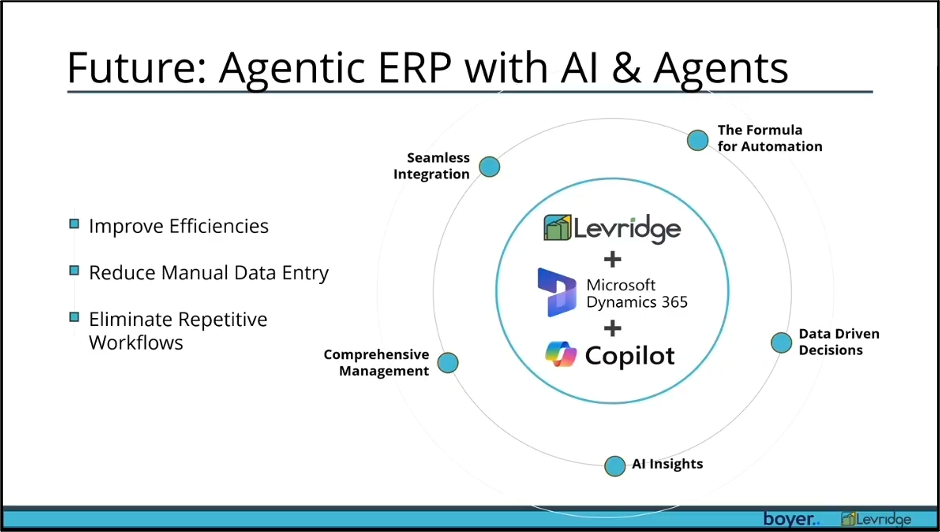
With Microsoft Dynamics 365 Finance & Supply Chain Management (F&SCM), that infrastructure burden moves to Microsoft. No server replacement cycles, no security patching on your plate, no guessing what a harvest-time outage costs. You trade unpredictable capital expenses for a predictable subscription.
Reporting Is a Labor Cost, not a Software Feature
When your CFO asks for a grain position report and it takes days to produce, that’s not just a software limitation. That’s your finance team, your controller, and your operations leads tied up in reconciliation instead of running the business.
It doesn’t have to work that way. With clean, centralized data and Microsoft Power BI integrated natively into F&SCM, your team can see grain deliveries, contract completion, geographic positions, basis, and quality in real time, on a phone, without waiting for end-of-month. You stop being reactive and start being proactive.
“Bad data in is bad data out. If you’re trying to plug AI into a system with bad data and bad architecture, the results are going to be bad: inconsistent calculations, wrong numbers, information that’s behind.”
— Boyer & Associates
The People Problem Is Accelerating the Timeline
Here’s a TCO cost that almost never makes it into the analysis: the person who knows how everything works is probably thinking about retirement.
Long-tenured employees who understand your legacy system’s quirks and workarounds take years of undocumented institutional knowledge with them when they leave. Onboarding a replacement into a 20-year-old on-premises environment is a fundamentally different problem than bringing someone onto a modern cloud platform with documented processes and active vendor support.
Legacy vendors are sending signals too. If you’ve heard “the person who built that feature is no longer here” or “we’re not actively making changes at this time,” those aren’t just support delays. They’re indicators that the platform is winding down.
The End-of-Life Clock Is Ticking
For businesses running Dynamics GP as their legacy ag ERP platform, the urgency isn’t just operational. It’s structural. Microsoft has announced that Dynamics GP will reach end of product support on December 31, 2029, with security updates ending April 30, 2031. No new major features have been added since October 2022.
Organizations that wait until 2028 or 2029 to start planning won’t just be making a rushed decision. They’ll be competing for implementation resources with hundreds of other companies in the same position. The window for a thoughtful, well-executed migration is open now. It won’t stay that way.

Why Boyer & Associates and Levridge
Boyer brings 30+ years of experience guiding agribusinesses through ERP transformations. We’ve been named Microsoft US Partner of the Year and recognized as a Microsoft frontier firm for AI adoption. We understand both the technology and the organizational change required to make these transitions successful.
Levridge brings the ag-specific product depth built by people who have actually run these businesses. Together, Boyer and Levridge offer a path forward that’s grounded in how this industry works, not just how ERP systems work.
If you’re running on legacy ag software and wondering whether the time is right to explore your options, the short answer is yes. Not just because of the end-of-life clock, but because every day on a disconnected, siloed system is a day your competitors are pulling further ahead on reporting speed, operational efficiency, and AI readiness.
Ready to start the conversation? Contact Boyer & Associates today. Whether you’re ready for a full agribusiness assessment or just want to understand your options, we’re here to help you figure out the next step with confidence.
Watch the full recording: Why Legacy Ag Software Is Holding Back Growth.
Read next: Why Legacy Agribusiness ERP Software Is Quietly Killing Your Growth

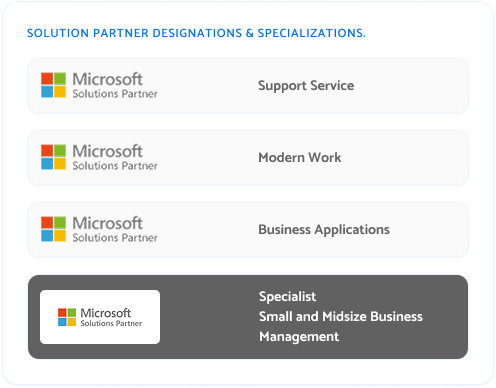
Boyer & Associates is a Microsoft technology partner with 30+ years of experience implementing Dynamics 365 Finance & Supply Chain Management, Business Central, and the full Microsoft stack for agribusinesses, manufacturers, distributors, and nonprofits. Boyer is the 2023 Microsoft US Partner of the Year and a recognized Microsoft frontier firm for AI adoption. Learn more at boyerassoc.com.