



At Boyer, we are noticing a familiar pattern that has been slowly emerging across the market: a company purchases Microsoft Copilot licenses, enables them broadly, and expects transformation to immediately follow. Ninety days later, leadership is asking — where is the return? And the honest answer is this, the ROI is actually not gained just by turning on the technology, it's gained by ensuring Microsoft Operational Readiness.
Microsoft Copilot operational readiness is the process of preparing your people, data, permissions, workflows, and governance so Copilot can support real business outcomes instead of simply adding another tool to the environment.
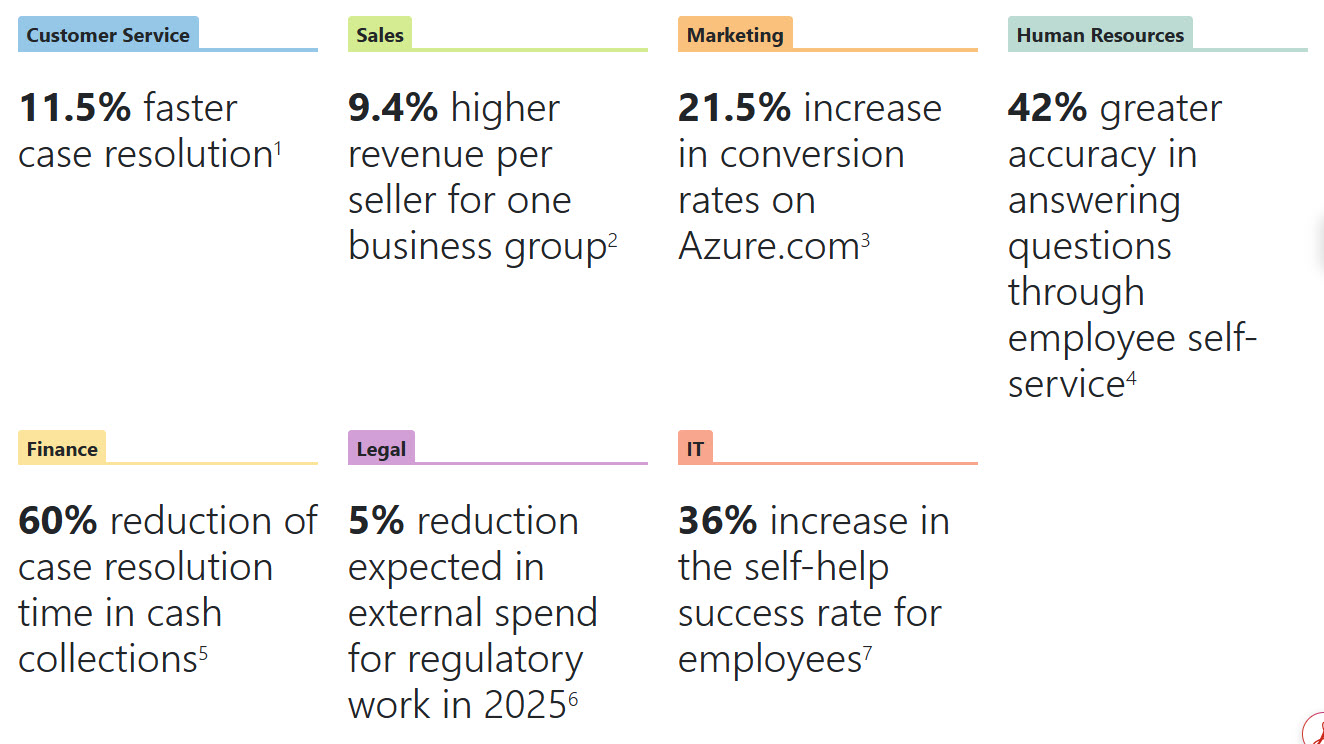
Sure, Microsoft's own internal adoption research points to meaningful, measurable value. After 3 months of use, 70% of users reported being more productive; 68% said the quality of their work improved, and when you look across specific teams and roles-- the data shows significant gains.
Copilot’s Early Impact, by Function1
Microsoft makes it look so easy, but consider a typical SMB, where Microsoft 365 Copilot gets deployed to 200 employees.
Project files are scattered across multiple locations; permissions haven't been reviewed and validated in years, and users aren't sure when, where and how they should be using AI versus their existing processes. Three months later, leadership is questioning the investment.
The problem wasn't technology, the organization never defined how AI would fit into the work. So the challenge is that most organizations don't struggle with AI itself, they struggle with incorporating AI into the way work gets done.
Why Microsoft Copilot and AI Initiatives Stall
Copilot inherits an organization's existing content, permissions, and processes. When those foundations are sound, they accelerate outcomes. When they are not, it makes the underlying gaps visible, and Copilot loves to expose problems that were already there.
Because of that, most Copilot roll-outs that have stalled can usually be traced back to common issues that tie back to the following:
Now that is not to say all Copilot initiatives will stall. In fact, we've seen some organizations who are ready to move quickly, but that is only because they have already done the less glamorous work up front e.g. defined the business process they want to improve, cleaned up the data and information Copilot will rely on, reviewed and validated permissions, trained users on practical AI scenarios tied to their specific roles, and agreed on how success will be measured.
For example, imagine a professional services firm rolling out Copilot to improve proposal development. Before turning on licenses broadly, the firm first:
What Microsoft Copilot Operational Readiness Looks Like in Practice
We have actually seen this show up in very practical ways.
One organization wanted Copilot to help employees find answers faster, but its project documentation lived across Teams channels, SharePoint sites, email attachments, and personal file locations. Copilot did not create the content problem — it exposed it. The real work was defining where information should live, who owned it, and how employees should maintain it going forward.
In another case, a sales team was interested in using Copilot to summarize customer activity and suggest follow-up, but account notes, opportunity details, and customer history were not being captured consistently in Dynamics 365. The AI use case was valid, but the bigger opportunity was improving CRM adoption and standardizing the sales process so Copilot had reliable information to work from.
We have also worked with finance and operations teams that were excited about AI-assisted reporting, approvals, or vendor-related workflows, only to discover that the underlying process varied by person, department, or location. Before AI could meaningfully accelerate the work, the business first needed cleaner data, clearer ownership, and more consistent processes inside its Microsoft environment.
Taken together, these examples point to the same lesson: AI value depends on operational readiness.
Boyer offers Microsoft Copilot readiness and adoption services to help customers move from AI interest to AI impact by connecting the technology to the real work — the systems people use, the data they trust, the processes they follow, and the outcomes leadership needs to measure.
We help organizations prepare their Microsoft environment for AI by improving governance, organizing content, strengthening business processes, and aligning tools like Microsoft 365, Dynamics 365, Business Central, and Copilot to the way work actually gets done.
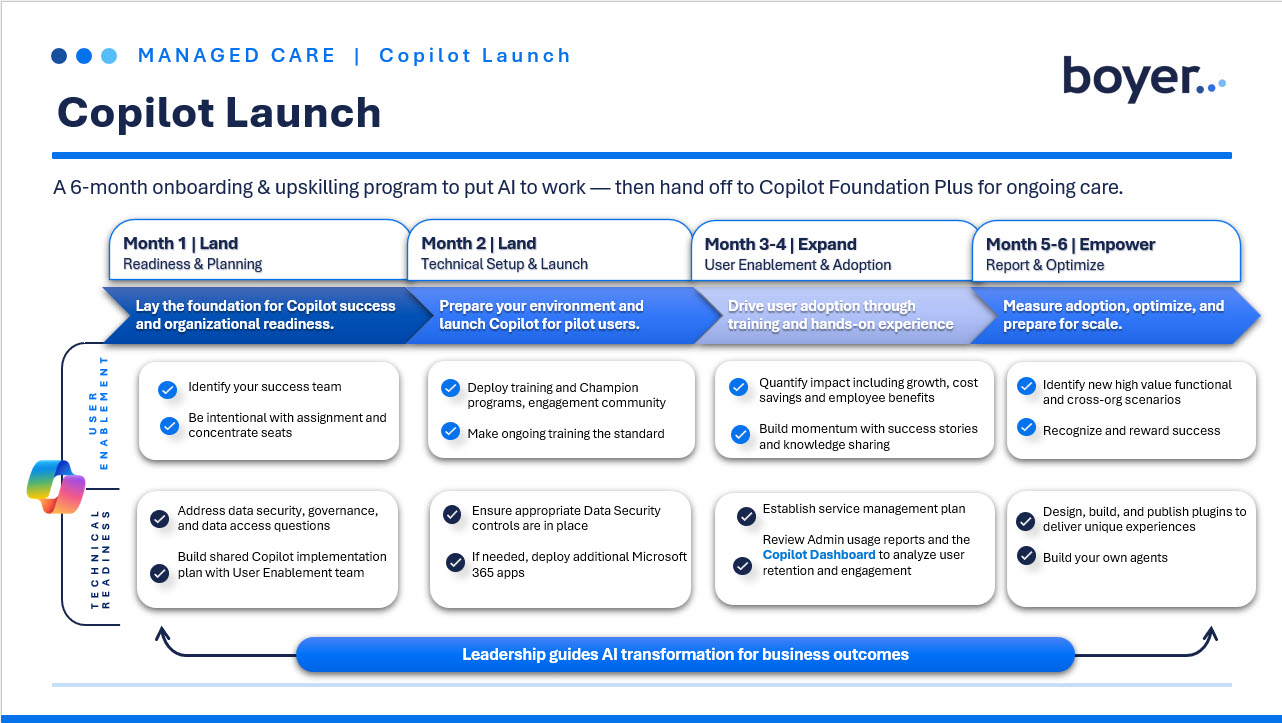
Have you invested in Copilot, and aren't sure where you stand with operational readiness? Start by asking yourself these 6 simple questions:
If you organization has invested in Copilot or is exploring a Copilot roll-out, and you can't answer yes to all of those questions, then you are at risk for a stalled Copilot initiative.
The next step is not just more/new/different technology — it is getting a clearer path to value.
Boyer can help you identify the right use cases, clean up the operational roadblocks, and build an adoption plan that turns AI into a measurable part of the business. Reach out today and we'll set up a call to discuss which of the 6 initiatives you want to prioritize.